
Get Color Pack: Sort Puzzle
Tripledot Studios LimitedPuzzle
4.8501.00 Reviews
- Version
- 1.6.9
- Installs
- 1.00M
- Age Rating
- Everyone
Screenshots
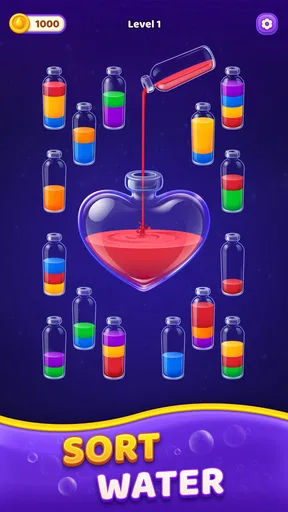
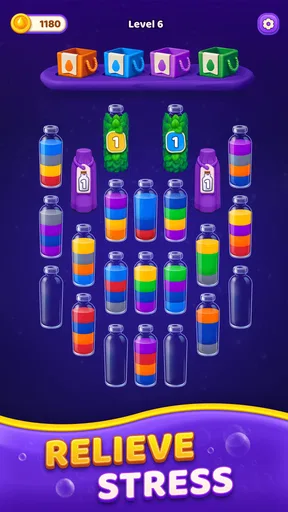
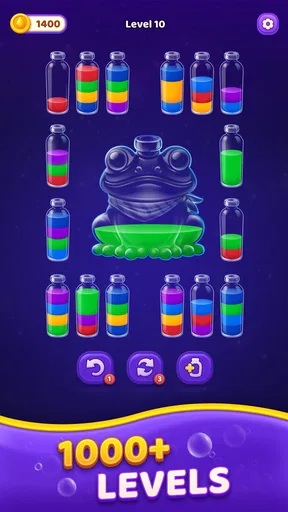
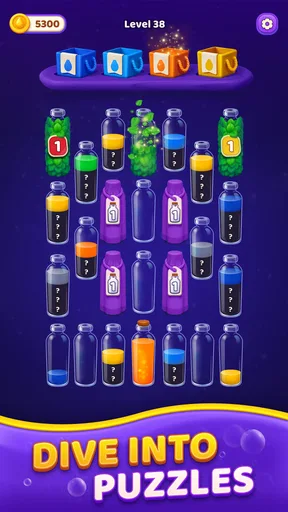
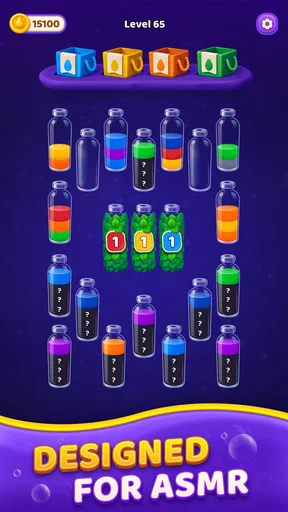
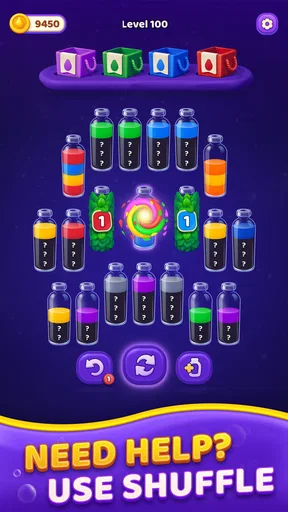
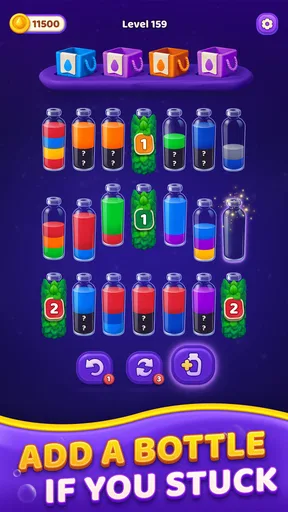

Our Review of Get Color Pack: Sort Puzzle
 Analysis by Appyee
I started Get Color Pack: Sort Puzzle expecting a simple color-matching distraction, but its appeal became clearer after a few rounds: the game turns arranging colored pieces into a small, repeatable ritual. I pick up an item, decide where it belongs, watch the board become tidier, collect the result, and then find myself considering one more level. That cycle is the real product here, rather than a large story, a complicated rule set, or a competitive challenge.
This is a free puzzle game from Tripledot Studios Limited, aimed at Everyone and available for devices running Android 6.0 or later. It has reached over a million installs and holds a 4.8 average from around eighteen thousand ratings, which fits my impression that it is designed for broad, casual play. The current version is 1.4.6, and optional in-app purchases range from $0.99 to $89.99 per item. I would not approach it as a deep strategy game, but as a polished sorting pastime that works particularly well when I want something understandable within seconds.
How the sorting loop feels in actual play
I focus here on the practical feel of the sorting loop: how a move changes the board, when it pays to pause, and why a clean finish can make a short session feel complete. Those details also reveal the game’s central trade-off: its clarity is welcoming, but it leaves less room for the kind of discovery that makes a harder puzzle linger in your mind.
The first move is easy to understand
The strongest part of the opening experience is how quickly the central action makes sense. I see a collection of colored objects and begin placing or organizing them according to their matching colors. There is no need to learn a long tutorial before making progress. The first action is deliberately modest: identify a color, find its destination, and make the move.
That simplicity matters on a phone. I can play while waiting for a kettle to boil or during a short break without having to remember a complicated control scheme. The interaction feels more like handling a tidy little tray than solving a traditional crossword or studying a large logic grid. The game asks me to notice relationships rather than calculate several steps ahead.
At first, I tend to move the obvious pieces immediately. That is satisfying, but it is not always the best habit. Once the arrangement becomes less open, I get more value from pausing to inspect which colors are blocking others. A useful approach is to clear the most accessible groups first while keeping an eye on the pieces that will become available afterward. This turns an apparently automatic task into a light planning exercise.
The important distinction is that the challenge comes from order and visibility, not from obscure rules. I am rarely wondering what the game wants me to do. I am deciding which correct-looking action will leave the cleanest next position. That makes the puzzle approachable for younger players and for people who normally avoid games with instructions, while still giving careful players a reason to think before tapping.
Color feedback makes every action readable
Each successful placement gives the loop a clear sense of cause and effect. I make a move, the arrangement becomes more coherent, and the visual response confirms that I am moving in the right direction. This feedback is essential because sorting can otherwise feel like repetitive manual work. Here, the board’s changing appearance supplies the immediate reward.
I especially like the way progress becomes visible without requiring a separate explanation. A messy arrangement gradually looks organized. That transformation gives me a small visual target even when the individual move is unremarkable. The satisfaction comes less from a dramatic surprise and more from watching disorder disappear one decision at a time.
There is also a useful rhythm to the difficulty. Obvious matches let me settle into the controls, while less convenient placements make me slow down. I do not experience the game as one long problem; I experience it as a series of small decisions connected by increasingly tidy feedback. That pacing is a better fit for short sessions than puzzles that demand uninterrupted concentration.
Still, the same clarity can become a limitation. Players who want ambiguity, deduction, or a strong “aha” moment may find the feedback too direct. The game is not trying to hide the goal behind layered clues. Its pleasure comes from execution and arrangement. If your ideal puzzle is a difficult brainteaser that keeps you stuck for a while, this will probably feel lightweight.
Why the reward works without being complicated
After I complete a sorting task, the reward is tied to completion itself: the board has been resolved and the visual clutter has been removed. That may sound modest, but it is exactly why the game is easy to revisit. I do not need to build a character, follow a plot, or understand a larger economy before the result feels worthwhile.
The reward also reinforces the action I just performed. I was not simply tapping colored pieces; I was improving a visible arrangement. When the final pieces fall into place, the finished state feels like evidence that my choices were correct. For a casual puzzle, that is a well-judged form of reinforcement because it keeps attention on the sorting rather than burying the result under unrelated systems.
My practical tip is to treat completion as the reward and not rush immediately into the next challenge. Taking a moment to notice the finished layout helps preserve the calming quality of the game. If I tap through every transition as quickly as possible, the experience becomes more like a task list. A slower finish makes the reset feel intentional instead of automatic.
The free entry point is another part of the reward structure. I can begin without paying, try the core loop, and decide whether its pace suits me. Optional purchases are present, with individual items priced from $0.99 to $89.99. That wide range makes it important to check the purchase prompt carefully and avoid treating every offered item as necessary. In my view, the game should first be judged by how enjoyable the basic sorting feels, not by what can be added around it.
The reset is what creates another session
Once a puzzle is finished, the board resets the relationship I have with the game. The previous arrangement is no longer a problem to solve, and I get a fresh reason to inspect colors, choose an order, and restore visual balance. This is where the “one more” quality comes from. The next session is not driven by a complicated narrative cliffhanger; it is driven by the promise of another contained act of organization.
That reset works well for fragmented time. I can stop after a completed board rather than leaving a large unfinished campaign hanging over me. If I only have a few minutes, the game does not make that short visit feel pointless. Conversely, when I have more time, the repeated structure gives me a smooth way to continue without relearning anything.
There is a trade-off here. The reset makes the game accessible, but it can also make the overall experience feel cyclical. Players who need a strong sense of long-term development may eventually want more variety than sorting and completing can provide. I would choose a larger puzzle adventure, a word game with a persistent challenge, or a strategy title if I wanted a lasting project. This one is better understood as a sequence of neat, self-contained mental breaks.
I also find that the reset encourages a useful stopping rule: finish the current puzzle, then decide whether I genuinely want another. That is better than beginning with an open-ended intention to play indefinitely. Because the loop is so easy to restart, setting that small boundary helps keep the game relaxing rather than letting it consume a longer break than planned.
Small decisions that improve the experience
The most useful technique I found is to separate “available” from “safe.” A piece may be easy to move, but that does not mean moving it immediately is wise. I first scan for colors that have only one obvious destination, then consider which placement will expose the most useful space. This adds a little foresight without turning the game into a demanding analytical exercise.
A second technique is to avoid judging progress only by the number of pieces moved. Sometimes a move that appears less productive creates a cleaner arrangement for several later actions. Looking at the shape of the remaining clutter is more informative than chasing quick taps. The game rewards visual patience, even though it never feels like it is asking for a formal strategy.
For a shared household device, the Everyone rating makes the game easy to recommend as a gentle option for a wide age range. I would still supervise younger children around any purchase prompts, especially because the available item prices cover a broad span. The sorting itself is suitable for casual family use, but purchase awareness remains a sensible part of using any free game.
For adults, the best use case is probably transition time: a commute break, a pause between chores, or a few minutes before bed. I would not use it when I need a demanding workout for memory or logic. Its strength is that it gives my attention a small, concrete object to organize. That can be refreshing after a day of switching between messages, tabs, and unfinished tasks.
Where it stands beside other puzzle choices
Compared with match-three games, this sorting puzzle feels less dependent on creating chains or chasing explosive combinations. My attention stays on placement and order instead of waiting for a cascade. That makes it calmer, although also less spectacular. Someone who enjoys constant visual effects and high-energy turns may prefer a match-three alternative.
Compared with classic tile-matching games, the focus here is more about arranging a whole situation than spotting one pair at a time. I get a stronger sense of gradually cleaning a board, but less of the sharp pattern-recognition challenge found in traditional matching formats. Compared with Sudoku or nonogram puzzles, it requires less abstract deduction and offers faster feedback. Those alternatives are better when I want a sustained reasoning exercise; this is better when I want a quick, tactile resolution.
It also differs from physics-based sorting games because the appeal is not primarily experimentation with movement or gravity. The central satisfaction comes from color organization and the visible transition from mixed to ordered. That makes the experience easier to pick up, but it may feel restrained to players who want surprises caused by complex interactions.
The comparison explains who should skip it. I would not recommend it as a first choice for someone seeking a campaign, deep progression, multiplayer competition, or puzzles that remain difficult for long stretches. I would recommend it to someone who likes clean visual goals, short attempts, and a loop that explains itself through action and feedback.
Practical details before installing
The game is free to start, and its Everyone content rating makes it broadly approachable. It requires Android 6.0 or later, so it is compatible with many older Android devices as well as newer ones. The developer is Tripledot Studios Limited, and the current version is 1.4.6. Those details make it a straightforward option for someone looking for a low-commitment puzzle rather than a demanding download.
The release date is Mar 30, 2026, and the store page identifies it as a puzzle game rather than a broader arcade or strategy product. I would keep expectations aligned with that label: the core value is the repeated sorting activity, not a large collection of unrelated modes. The store summary presents the idea as a satisfying packing challenge, and in play I found that the satisfaction depends on whether you personally enjoy turning a mixed layout into an orderly one.
Before spending anything, I would play enough free content to answer three practical questions. Do the color distinctions remain comfortable for your eyes? Does the pace feel pleasantly focused or too repetitive? And do you enjoy planning the next placement, or would you rather have a puzzle with a more explicit answer to discover? Those questions are more useful than judging the game by its install count or rating alone.
My verdict on the complete loop
The loop is coherent from beginning to end: I identify a color, make a placement, receive clear visual confirmation, finish an increasingly tidy arrangement, and reset into another compact challenge. The action is immediate, the feedback is readable, the reward is visible, and the reset is quick enough to make another session tempting. Nothing in that sequence feels unnecessarily complicated.
My reservation is that the same streamlined design limits its depth. After several sessions, the pleasure depends heavily on how much you enjoy sorting itself. There is no need to pretend that this is a substitute for a serious logic game. It is a focused casual puzzle, and it succeeds when used for that purpose.
I would install it if I wanted a free, approachable way to fill small gaps in the day with color-based organization and light planning. I would skip it if I needed a rich story, intense difficulty, or a long-term competitive goal. For the right player, Get Color Pack: Sort Puzzle is a satisfying little reset button: make the mess orderly, enjoy the finish, and decide whether the next arrangement deserves a few more minutes.
Privacy and Permissions
See what permissions an app requests and how it handles your data.
- Phone
- read phone status and identity
- Photos/Media/Files
- read the contents of your USB storage, modify or delete the contents of your USB storage
- Storage
- read the contents of your USB storage, modify or delete the contents of your USB storage
- Wi-Fi connection information
- view Wi-Fi connections
- Device ID & call information
- read phone status and identity
- Other
- view network connections, full network access, control vibration, prevent device from sleeping, Google Play license check
Verdict
Strengths of Get Color Pack: Sort Puzzle
- Simple tap-and-sort controls are easy for players of all ages.
- Short levels make it convenient for quick breaks or casual play.
- Gradual difficulty increase keeps the early gameplay approachable.
- Color-based puzzles provide a relaxing, visually focused experience.
- Playable offline, making it useful when an internet connection is unavailable.
Limitations of Get Color Pack: Sort Puzzle
- Repeated sorting mechanics may feel monotonous during longer sessions.
- Some later puzzles can depend more on patience than strategic planning.
- Ads may interrupt the experience, especially between completed levels.
- Bright colors and animations may be uncomfortable for sensitive users.
- Progression may feel limited for players seeking a deeper puzzle challenge.
Other Releases by Tripledot Studios Limited
View All
Woodoku - Wood Block Puzzle
Puzzle4.2

Get Color - Water Sort Puzzle
Puzzle4.8


Nut Sort: Color Sorting Game
Puzzle4.8
Similar Picks in This Category
View All
Block Blast!
HungryStudio4.8

Braindom: Brain Games Test
Lahana Game Studio4.6

AMAZE!
CrazyLabs LTD4.6

Sudoku - Classic Sudoku Puzzle
Oakever Games4.7

Art Puzzle - Puzzle Games
Easybrain4.8

Amaze GO!
Oakever Games4.9
Frequently Asked Questions
What is Get Color Pack: Sort Puzzle?
Get Color Pack: Sort Puzzle is a casual color-sorting game built around organizing colored liquids, balls, or similar items into matching containers. Each level asks you to plan a sequence of moves so that identical colors end up together. The early stages are simple and relaxing, while later puzzles require more careful thinking, temporary storage, and efficient use of the available spaces.
How do you play Get Color Pack: Sort Puzzle?
Gameplay is generally based on tapping one container and then another to transfer its top color or movable items. You can only make a move when the destination has enough room and follows the game’s matching rules. The objective is to sort every color correctly using as few unnecessary moves as possible. Paying attention to the order of colors is essential, because an early mistake can block useful options.
Is Get Color Pack: Sort Puzzle free to download and play?
The game can typically be downloaded without an upfront purchase, allowing players to begin solving puzzles for free. However, free mobile games may include advertising, optional purchases, or paid features such as hints, extra undo actions, and ad removal. Before downloading, check the current Google Play or App Store listing for pricing, in-app purchase details, supported devices, and any changes to the monetization model.
Does Get Color Pack: Sort Puzzle require an internet connection?
Many color-sorting puzzles can be played offline after installation, which makes this type of game convenient for travel, waiting rooms, or areas with unreliable connectivity. Nevertheless, an internet connection may be needed for advertisements, cloud-related services, updates, rewards, or purchases. Availability can vary by version and device, so it is best to test the game in airplane mode rather than assuming every feature works offline.
Is Get Color Pack: Sort Puzzle suitable for children and casual players?
The simple controls and easy-to-understand sorting concept make Get Color Pack: Sort Puzzle accessible to casual players and older children. It does not usually require fast reactions, so success depends more on observation and planning than on reflexes. Parents should still review the store’s age rating, advertising content, privacy information, and optional purchases, especially if the game will be used by younger players.
Play our best games!


